Last updated: August 9, 2026 | By Lawrance | Written for Philippines casino readers who want to protect accounts, OTPs, devices, payment wallets and login records before money or documents are exposed.
Casino account security is not only a password issue. The risk often starts with a copied login page, a private agent link, a shared OTP, a lost phone, or a payment wallet that is still connected after the player has stopped using the site.
Quick answer: use a unique password, never share OTP codes, check the exact login URL, keep wallet and email access protected, avoid private links, and freeze activity immediately if a login, withdrawal, or KYC request looks unfamiliar.
Account Security Checklist
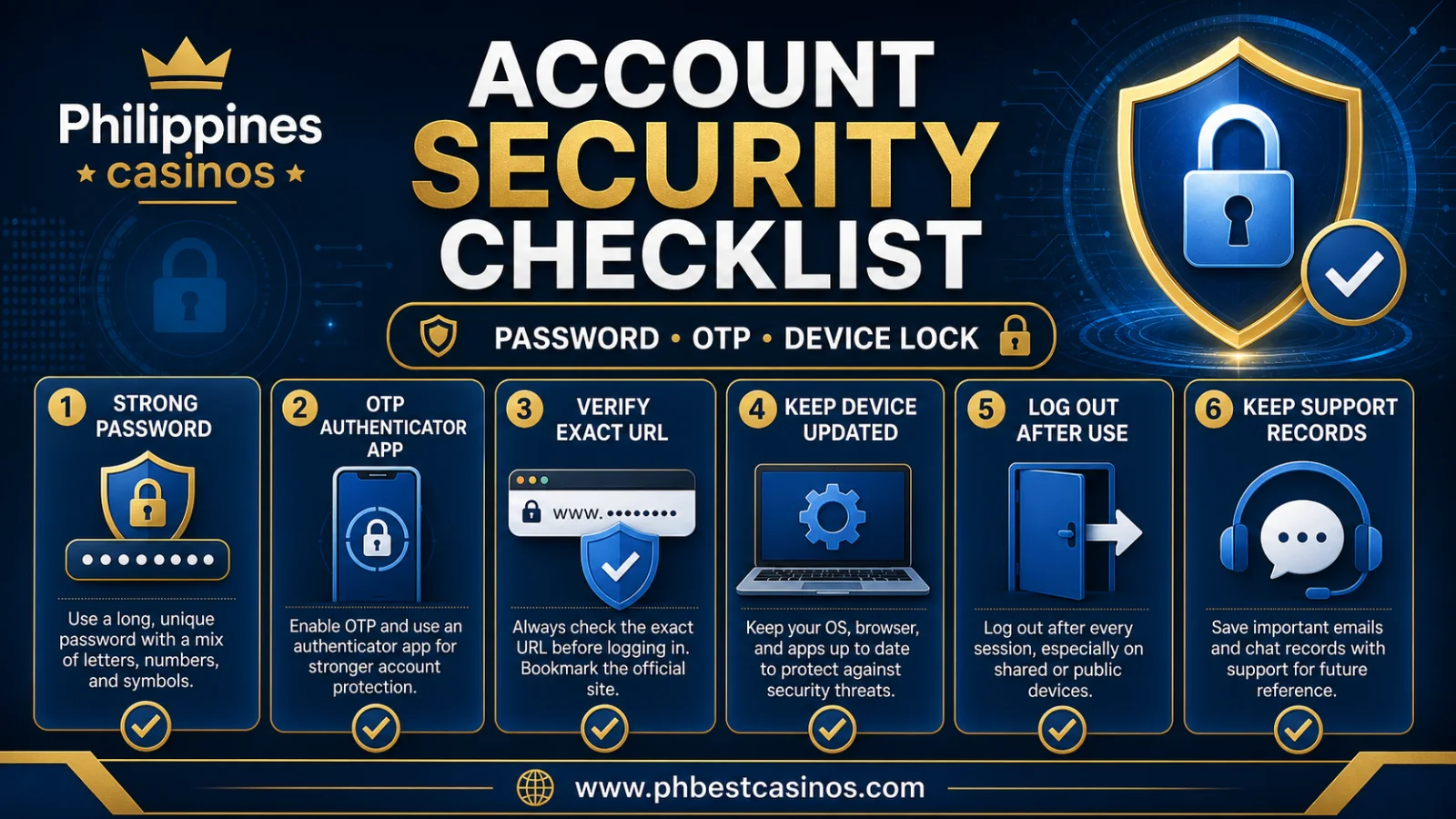
Good security is boring by design. The goal is to make account takeover harder and make recovery evidence clearer if something goes wrong. Start with the account, then protect the email, phone, payment wallet and device.
| Security layer | Action | Why it matters |
|---|---|---|
| Password | Use a unique password that is not shared with email, wallet, or social accounts. | A leaked password from another site should not open the casino account. |
| OTP | Treat OTP as a private login code and never send it to agents or chat support. | OTP sharing can give another person immediate access. |
| Protect the email used for password reset and support tickets. | Account recovery usually depends on email control. | |
| Wallet | Use your own wallet and monitor linked devices or transaction alerts. | Payment access can turn a login issue into a money issue. |
| Device | Lock the phone, remove old sessions, and avoid public Wi-Fi for cashier actions. | A stolen or shared device can expose login and payment records. |
Fake Login Page Red Flags
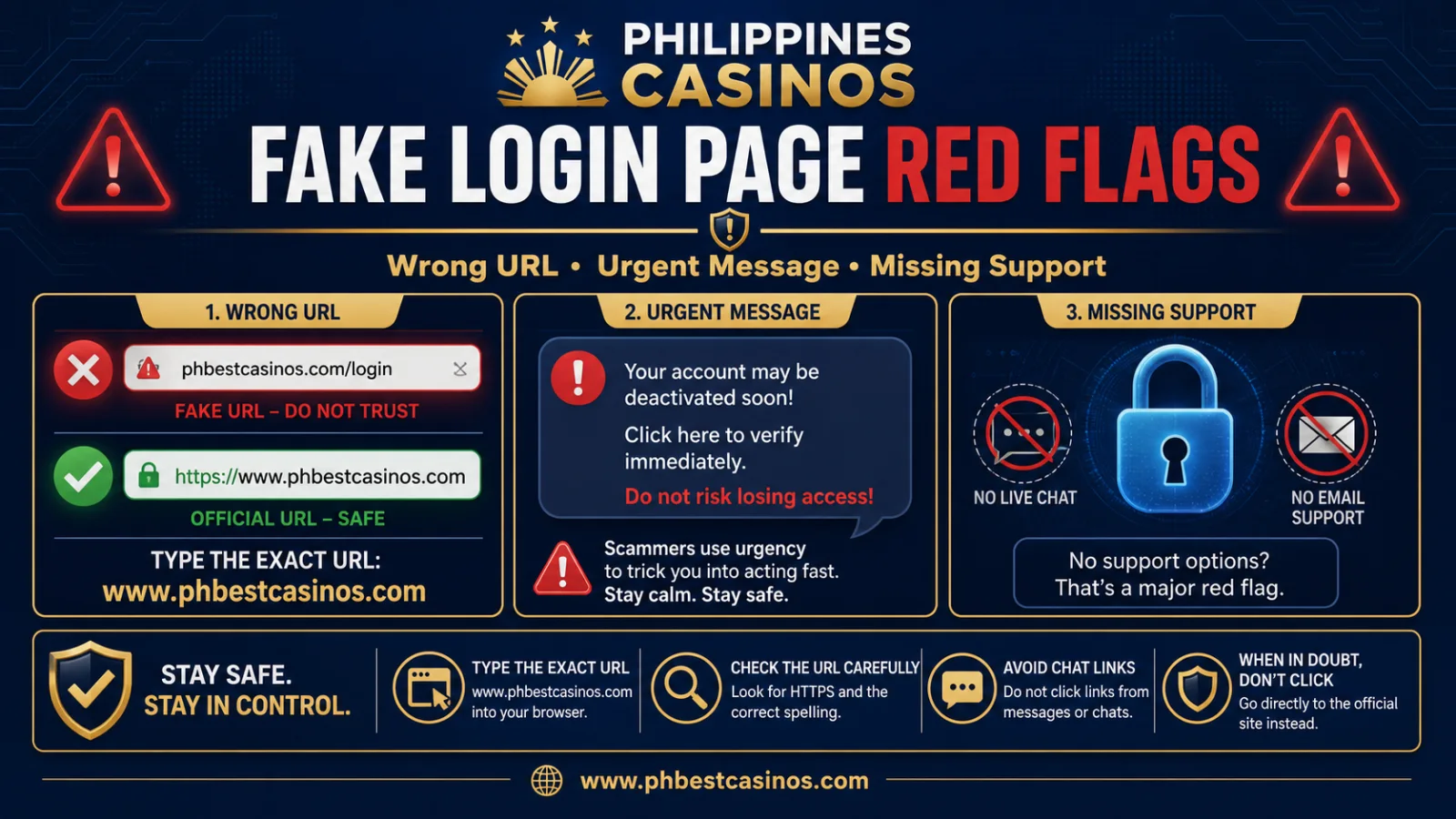
Fake login pages are designed to look familiar. They may copy a brand name, use a similar domain, ask for OTP early, or appear through a private message. A player should navigate from a saved official bookmark or typed domain, not from a random link.
| Red flag | What it looks like | Reader action |
|---|---|---|
| Wrong URL | Misspelled domain, extra words, or a login path that does not match the usual site. | Close the page and use the official bookmark. |
| OTP request before login | The page asks for OTP, wallet code, or recovery code unexpectedly. | Do not enter the code. |
| Copied logo | The page looks right but links, footer, or certificate details are strange. | Check the full address and avoid the form. |
| Private bonus link | A chat account says the link is needed for a special offer. | Use official site navigation only. |
What To Do If You Suspect Account Takeover
Fast, calm steps matter. Do not argue with the suspicious contact. Save evidence, change passwords through the official route, disconnect payment access where possible, and ask support to lock or review the account.
| Situation | Immediate step | Evidence to save |
|---|---|---|
| Unknown login alert | Change password from the official site and review active sessions. | Alert email, timestamp, IP or device details if shown. |
| Unexpected withdrawal | Contact official support and payment provider where appropriate. | Withdrawal screen, ticket number, wallet records. |
| OTP shared by mistake | Stop using the link, change password, and ask for account lock review. | Chat record and time the code was shared. |
| Fake page submitted | Change passwords for casino and email, then monitor wallet activity. | URL, screenshot, and form timing. |
KYC, Privacy and Support Boundaries
A real support team should not need your password or OTP. KYC documents should be uploaded through official account tools or a traceable support path. If a contact asks for identity files through a private message, treat it as a serious warning.
| Request | Normally acceptable route | Reason to stop |
|---|---|---|
| ID upload | Official account portal or documented support ticket. | Private chat link or personal email. |
| OTP | You enter it yourself on an official login page. | Agent asks you to send the code. |
| Password reset | Official reset email or account page. | Someone asks for the old password. |
| Wallet proof | Only when required through official support. | The contact asks for unrelated wallet details. |
FAQ
Should I share OTP with casino support?
No. OTP codes are private login or transaction codes. A support agent should not ask you to send the code in chat.
How do I spot a fake casino login page?
Check the full URL, avoid private links, watch for OTP requests, and compare navigation with the official site you normally use.
What if my phone is lost?
Secure your email and wallet first, then contact casino support through the official route to review or lock the account.
Is KYC upload always safe?
No. Only upload requested documents through official account tools or a traceable support channel, and avoid sending files to private contacts.
Source and Update Note
This article was updated on August 9, 2026 after reviewing current phishing, OTP, payment-wallet and account takeover search results, GCash Help Center security guidance, public PAGCOR reminders about illegal online gambling, and PAGCOR Responsible Gaming. Security threats and fake domains change quickly; verify the current URL and official support route before entering account or payment details.
Related Reading
- Online Casino KYC Philippines
- Casino Cashier Guide: Deposits, Withdrawals and Receipts
- How to Choose a Philippines Online Casino
- Philippines Casino Law Mistakes Guide
- Online Gambling Risk Guide Philippines