
Last updated: September 11, 2026 | Edited by Lawrance
A support agent who asks for an OTP, PIN, recovery code or a payment to “release” a withdrawal is not giving you a normal troubleshooting step. Treat the message as unverified until you open the casino yourself and find the same ticket in the authenticated support area.
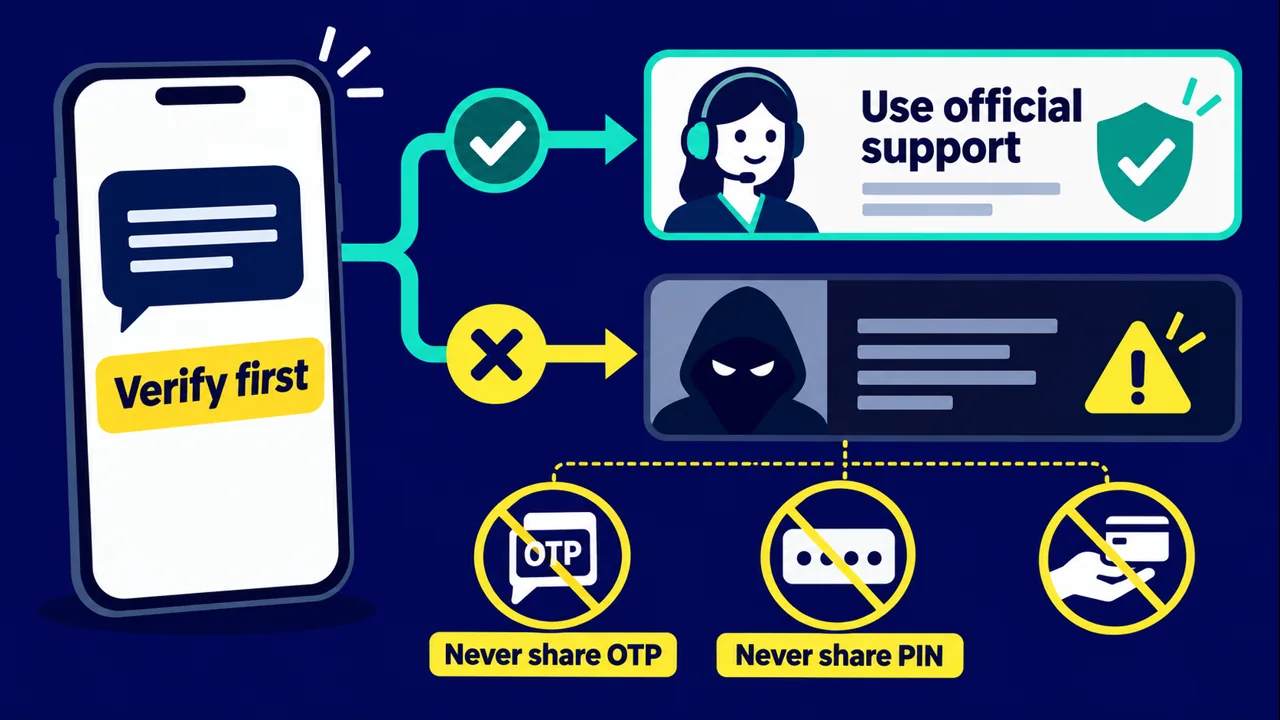
Read the request for what it asks you to send
The safest first filter is the requested information. A support team may ask for a ticket number or a transaction reference, but your PIN, OTP and recovery code should remain private. A request for a remote-access app or a screen-share is another reason to stop.
Do not click the message link to investigate. Type the known domain or use a saved bookmark, then sign in through the normal route.
- No OTP or PIN.
- No password or recovery code.
- No payment for customer-service access.
- No remote-control software installed for a chat agent.
Match the message to an account record
Inside the authenticated account, check whether the ticket number, time and issue appear in your support history. Compare the domain, spelling and reply address with the contact details published by the operator.
If the message is only in a social-media inbox or private chat, treat it as a lead—not proof. Our PAGCOR check explains why a brand name or badge does not replace an independent source.
| Signal | Safer interpretation | Action |
|---|---|---|
| Ticket appears in account | There is a record to verify | Reply inside the ticket |
| Only a private message | Sender is not authenticated | Do not reply or click |
| Urgency plus payment request | High-risk pressure | Stop and save evidence |
Contain the account if you already replied
Stop the conversation, change the casino password from the official site and review active sessions if the operator provides that control. Change a reused password anywhere else it was used. Contact the payment provider through its official app or help centre if payment details were exposed.
Keep screenshots with the sender, URL and timestamps. Redact your balance, ID number and unrelated personal information before storing or sharing the record.
- Secure the casino account.
- Secure the payment wallet or card.
- Keep the suspicious message and domain.
Use a verified route for the next question
Use the operator’s published help page or the authenticated ticket—not the number in the suspicious message. If the issue involves a pending cashout, the withdrawal timeline helps you ask for a traceable reference.
Method and limits: these checks reduce avoidable credential exposure but cannot determine whether a particular operator is legitimate. Gambling is for adults aged 21 and over; do not chase a loss or a delayed payment with another deposit.
Related reading: cluster reference, supporting checklist, and responsible-use information.
Sources and method
Method and limits: this article is an evidence-first reading aid. Operator terms, provider status and table rules can change, so check the current official page immediately before acting. Gambling is for adults aged 21 and over and is not a source of income.