Last updated: July 11, 2026 | By Lawrance | Checked by the Philippines casinos editorial team
Many players ask why casino results feel uneven even when they understand the rules. The answer is usually not one secret mistake. It is the combined effect of house edge, short-term variance, table or game rules, bonus pressure, and bankroll decisions made during emotion.
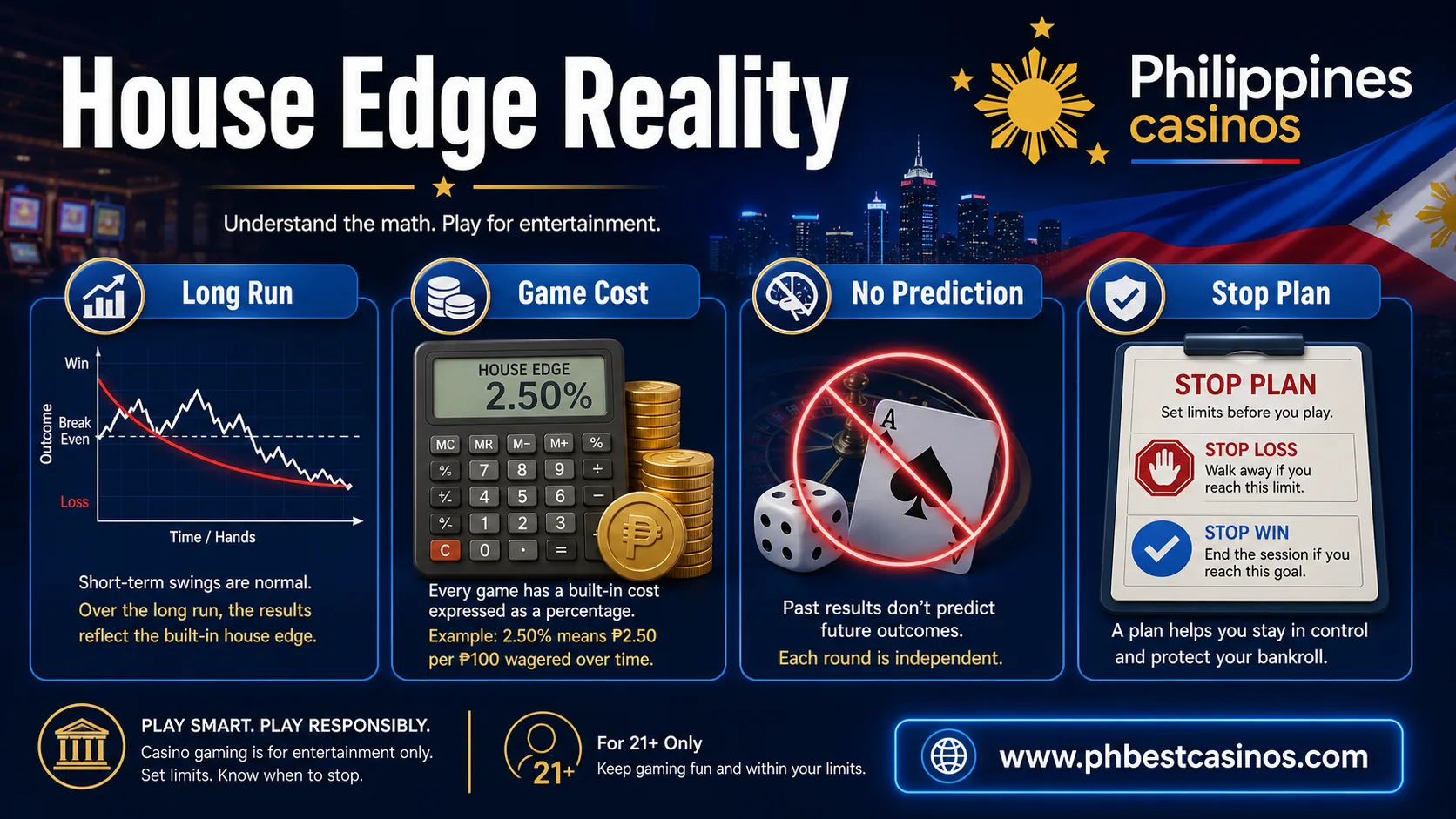
Quick answer: casino players tend to lose more over time because games are designed with a mathematical house edge. RTP and house edge describe long-run averages, not the next result. A player can reduce avoidable damage by choosing clearer rules, using a fixed budget, avoiding chasing, and stopping when the plan is done.
House Edge in Plain English
House edge is the built-in average cost of a game over many repeated bets. A game with a lower house edge can still lose quickly in one session, while a high-edge side bet can hit occasionally. The point is comparison, not certainty. The reader should use house edge as one filter together with bankroll, game speed, volatility, table limits, and bonus terms.
| Concept | Plain meaning | What it does not mean |
|---|---|---|
| House edge | The game’s long-run mathematical advantage to the operator. | It does not predict the next spin, hand, or match. |
| RTP | The long-run percentage returned by a slot or game version. | It does not promise one session will match the label. |
| Variance | The unevenness of short-term results. | It does not prove a game is due. |
| Bankroll | The money set aside for entertainment play. | It is not money that must be recovered. |
| Stop limit | A planned point where the session ends. | It should not move after emotion rises. |
Why Short Sessions Feel So Different
A player may see a lucky result in ten minutes or a sharp loss in five minutes. Neither result cancels the math. Short sessions are noisy because random games can swing far away from their long-run average. That is why a practical guide should focus on decisions the player controls: stake size, game choice, table limit, bonus terms, and stop point.
| Short-session event | Common reaction | Better interpretation |
|---|---|---|
| Several losses in a row | The next result must recover it. | Random results can cluster; chasing increases risk. |
| A small payout | The game is warming up. | A payout does not change the next result. |
| A near miss | A feature is close. | Near misses are not stored progress. |
| A side bet hits | The side bet is good today. | High-payout bets still need house-edge and stake checks. |
The Bankroll Problem
The math becomes more painful when bankroll decisions change during play. A player who raises stakes after losses, adds deposits quickly, or keeps playing because a bonus is close to expiry turns a planned session into a pressure session. That is often where losses grow faster than expected.
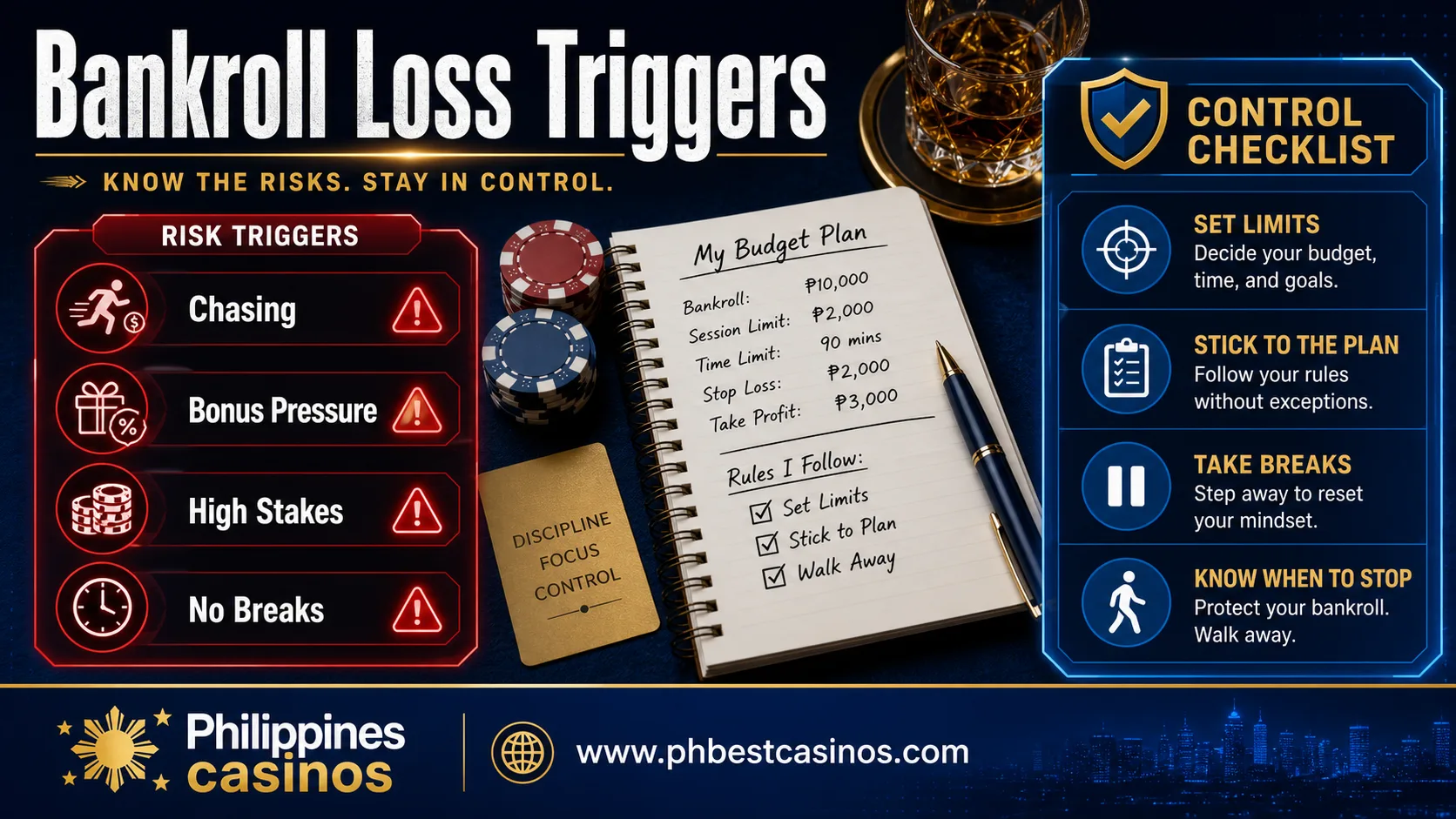
| Trigger | Why it increases loss risk | Control |
|---|---|---|
| Chasing | Stake size rises when judgment is weaker. | Stop or restart another day with a lower unit. |
| Bonus pressure | Wagering and expiry can extend play beyond the plan. | Accept only terms that fit the original budget. |
| High table limits | A normal swing can consume too much of the bankroll. | Use tables where the minimum bet is a small unit. |
| No breaks | Fatigue makes rules and limits easier to ignore. | Set a timer and leave the screen. |
| Borrowing | The session becomes financial pressure, not entertainment. | Do not borrow for casino play. |
Game Types and Cost Signals
| Game area | Cost signal to check | Reader note |
|---|---|---|
| Slots | RTP, volatility, paytable, bonus buy rules. | High volatility may need a smaller unit. |
| Baccarat | Banker, Player, Tie, side-bet payout, commission. | Main bets are easier to compare than side bets. |
| Live casino | Table minimum, pace, side bets, dealer rules. | Fast pace can create more decisions per hour. |
| Sports betting | Decimal odds, market margin, handicap line, settlement rules. | Odds show implied chance, not certainty. |
| Promotions | Wagering, expiry, max bet, contribution rate. | A bonus can increase time and decision pressure. |
A Simple Loss-Control Routine
Loss control is not about beating the game. It is about deciding in advance what the entertainment cost can be. The routine should be written before the session starts and should be boring enough to follow when the session becomes emotional.
| Before | During | After |
|---|---|---|
| Choose one budget and one unit size. | Do not change stakes after a loss. | Record whether the plan was followed. |
| Read game and bonus terms. | Stop at the time or money limit. | Avoid judging the session only by outcome. |
| Use only entertainment money. | Take breaks after fast swings. | Lower future limits if the session felt stressful. |
| Know support and exclusion options. | Ask support if rules are unclear. | Do not restart immediately to recover. |
FAQ
Does a lower house edge mean I should play longer?
No. A lower house edge only means the game is mathematically less costly than some alternatives over many decisions. It does not make long sessions safe or predictable.
Why do bonuses sometimes make losses worse?
Bonuses can add wagering, expiry, max bet, and eligible-game rules. If those rules push a player to continue after the original stop point, the bonus creates pressure.
Source and Update Note
This article was updated on July 11, 2026. It uses current reader intent, official responsible-play context, and practical checks that a Philippines reader can verify before depositing or playing. For general odds education, this article references independent game math resources such as Wizard of Odds on house edge. For local responsible gaming context, see the PAGCOR responsible gaming page. Game rules, payment terms, offers, table variants, odds, and account checks can change, so confirm the current terms on the site, cashier, sportsbook, or game screen before using real money.
Related Reading
- Casino Bankroll Strategy Philippines
- Baccarat Expected Value Philippines
- Casino Bonus Wagering Philippines Guide
- How to Choose a Philippines Online Casino Safely